by Caly McCarthy
Fair trade has many points of origin, from Edna Ruth Byler in Puerto Rico to Max Havelaar coffee on the shelves of Dutch supermarkets. One throughline? Showing up for your far-away neighbor when they’re under the thumb of injustice. Let’s unpack this through a particular moment in fair trade history—that of coffee farmers in 1980s Nicaragua—and see how Koinonia’s mail-order business had a very similar genesis a few decades earlier.
During the 1980s, coffee farmers in Nicaragua were facing economic and physical brutality at every turn. The United States government had issued a trade embargo against their country. This meant closing out access to a crucial export market. The US was also funding the Contras, a violent counter-revolutionary force that was terrorizing ordinary civilians. This violence happened in the streets as well as in the coffee fields. But there is only one major coffee harvest each year—that is, one opportunity each year to realize income. And those coffee cherries were ripe. So, Nicaraguan farmers issued a call to the wider world—come stand beside us. The Contras were less likely to shoot if white bodies stood in their way. The response? Folks from the US, Canada, and the UK arrived to be part of solidarity brigades, entering the coffee fields and creating a buffer of safety. Upon their return home, these outsiders began to organize summits and new models of business that used trade as a lever for realizing peace and justice in a deeply fractured world. They called it “fair trade.”
Let’s travel from the coffee fields of Nicaragua to the pecan orchards of southwest Georgia.
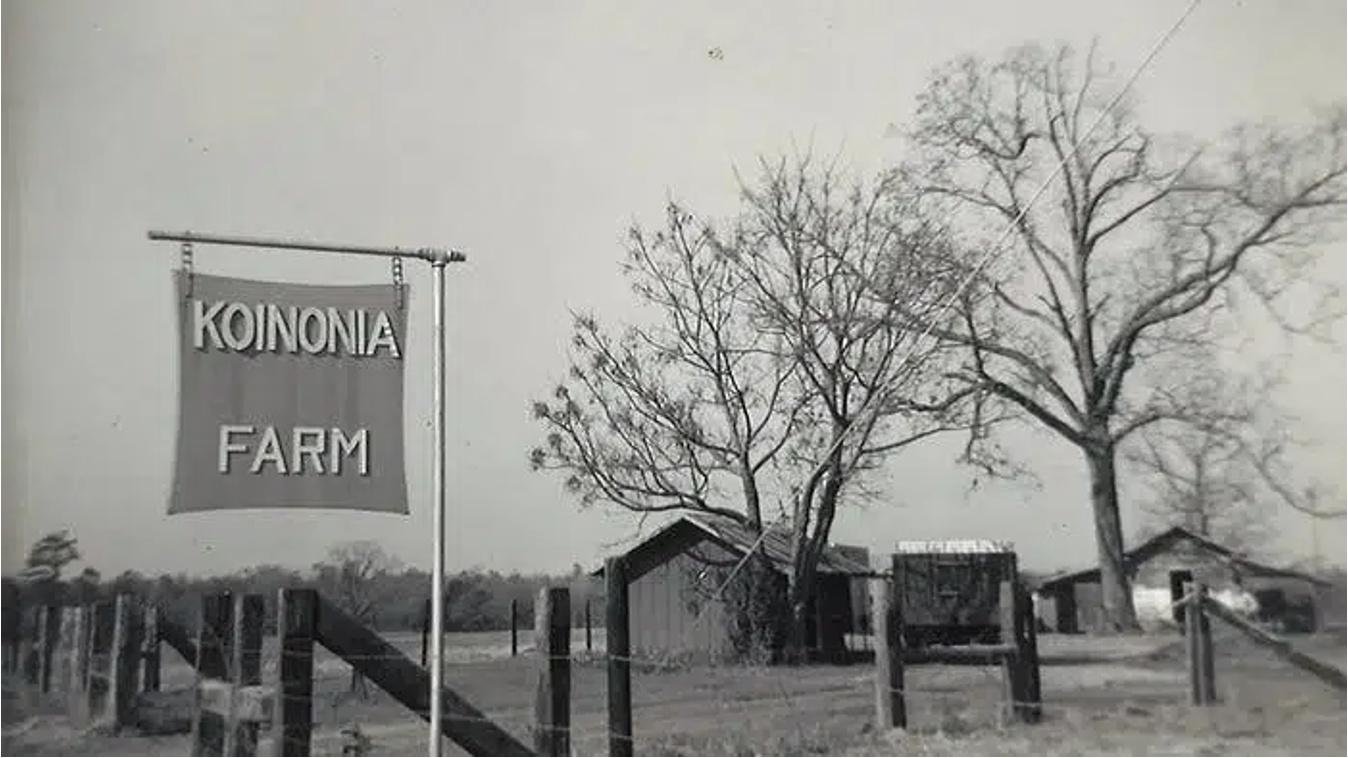
For years beginning in the mid-1950s, Koinonia Farm was under duress. Because of our commitment to the equality of all people, we became a sustained target of the Ku Klux Klan. Bullet fire into the Farm. Roadside stands blown up. Fences cut and trees chopped down. Another weapon of choice? A boycott against Koinonia—no one could sell us farm inputs, and no one could buy any crops we managed to raise. This economic stranglehold brought the Farm to its knees. We had to jettison our thriving poultry operation, and we lacked ready access to the agricultural inputs needed to sustain row crops.
What turned the tide was ultimately the birth of Koinonia’s mail-order business. We called upon our far-away friends on our mailing list. Please, we said, “Help us ship the nuts out of Georgia.” That’s the tagline we used to advertise our homegrown pecans. And folks showed up. Orders poured in, and pecans went out. A new season of Koinonia became possible, one that could move towards thriving instead of just surviving. This Fair Trade Month, we celebrate the long tradition of ordinary folks showing up for neighbors in the name of justice, and we’re grateful for the chance to partner with fair trade farmers in the coffee, tea, chocolate, and jewelry that we sell through our Koinonia store.
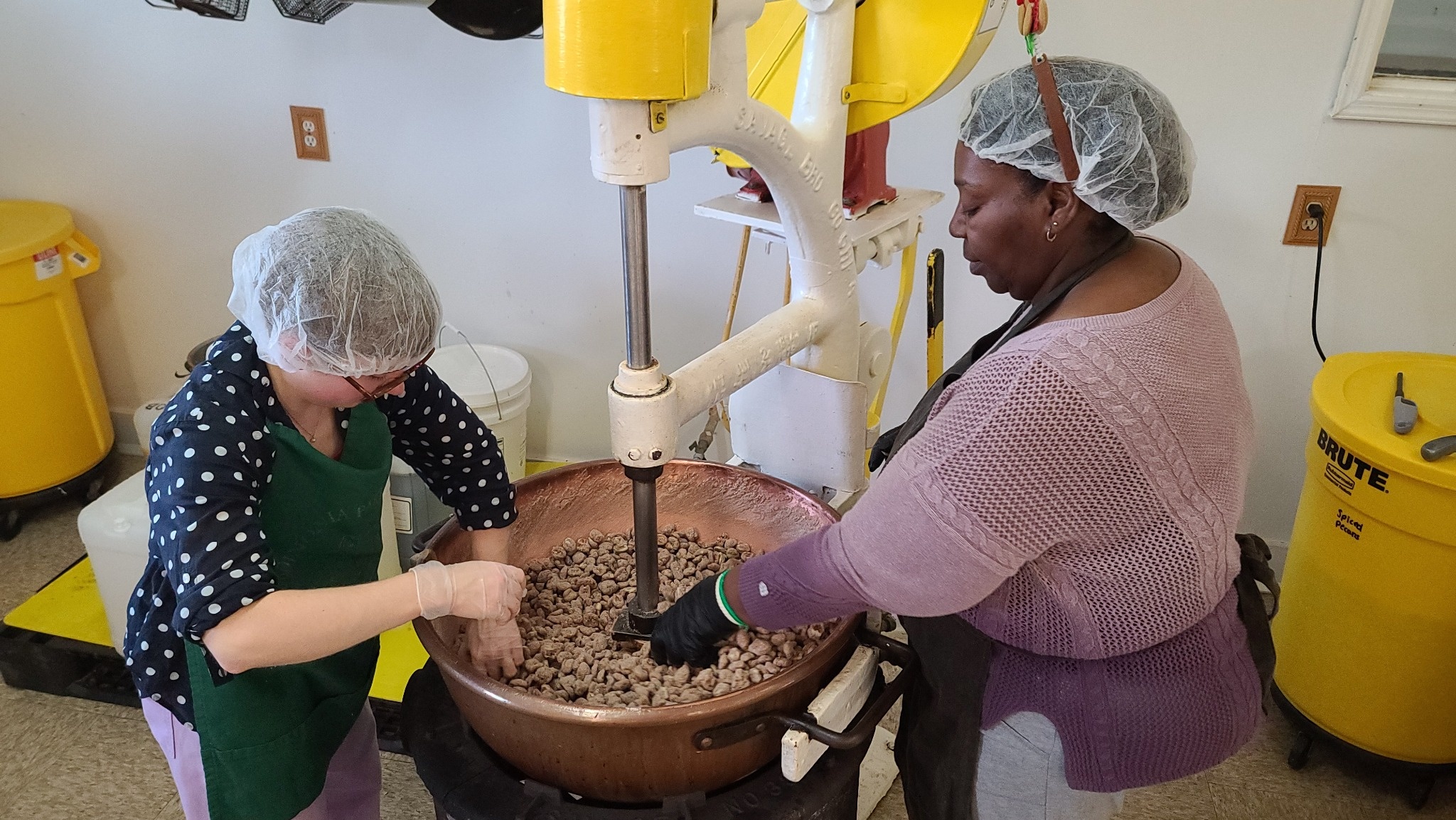
What began as a mail-order business selling plain pecans from our orchards during the economic boycott of the 1960s has evolved into a robust catalog of goods celebrating all-things-pecans, including but not limited to Cinnamon Spiced Pecans.